November 8, 2026
How Long Does It Take to Get a Private Pilot License in Los Angeles?
At The Flight Academy in Los Angeles, students typically earn a private pilot certificate in about 6 months. Some finish in as little as 3. The FAA minimum is 40 hours.
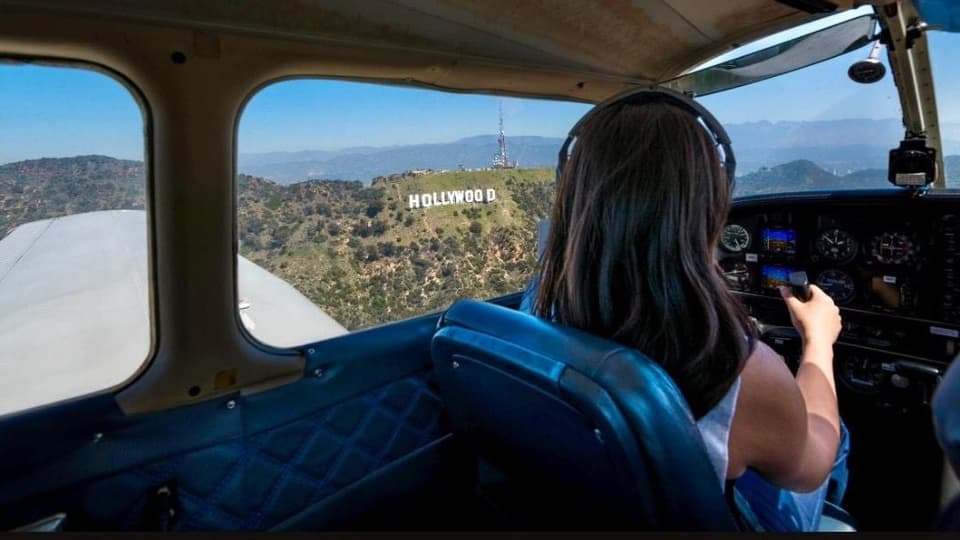
How long does it take to get a private pilot license in Los Angeles? The FAA calls it a private pilot certificate. At our sister school, The Flight Academy (opens in a new tab), students typically earn it in about 6 months, and some have finished in as little as 3 months.
Those are typical timelines, not a promise. Your pace depends on how often you fly, how quickly you meet the FAA's minimum requirements, and how soon you are comfortable and ready for the checkride.
Fly LA Experience does not run that course. A discovery flight from Van Nuys is the first step, and the time with your instructor can be logged. Full Part 61 training is at The Flight Academy. The split is explained on our flight lessons and pilot training page, and the steps are in how to become a pilot in Los Angeles.
Part 61 vs Part 141: what's the difference?
FAA-approved flight training in the U.S. happens under one of two sets of rules:
- Part 61 is the flexible path. Your instructor builds the training around you, and you schedule lessons when they fit your life.
- Part 141 is a structured program with an FAA-approved syllabus and set stages.
The Flight Academy trains under Part 61. That flexibility matters if you have a job, classes, or a family: you can fly more in a slow stretch and less in a busy one, without falling behind a rigid program. Both paths lead to the same FAA private pilot certificate. Fly LA Experience offers the introductory discovery flight, not the certificate course.
The FAA minimum: 40 hours (and why most people need more)
Under 14 CFR 61.109(a) (opens in a new tab), a private pilot applicant for a single-engine airplane rating needs at least 40 hours of flight time. That total has to include at least 20 hours of flight training from an authorized instructor and 10 hours of solo flight training, in the areas of operation for that rating.
At least 20 hours with an instructor, including
- 3 hours of cross-country flight training in a single-engine airplane
- 3 hours of night flight training in a single-engine airplane, including one cross-country flight of over 100 nautical miles total distance, and 10 takeoffs and 10 landings to a full stop (each landing involving a flight in the traffic pattern) at an airport
- 3 hours of flight training on the control and maneuvering of an airplane solely by reference to instruments
- 3 hours of flight training with an authorized instructor in preparation for the practical test, performed within the 2 calendar months before the month of the test
At least 10 hours solo in a single-engine airplane, including
- 5 hours of solo cross-country time
- One solo cross-country flight of 150 nautical miles total distance, with full-stop landings at three points, and one segment of more than 50 nautical miles in a straight line between the takeoff and landing locations
- 3 solo takeoffs and 3 landings to a full stop (each landing involving a flight in the traffic pattern) at an airport with an operating control tower
Forty hours is the legal floor, not a typical finish line. The FAA's FAQ on hourly requirements (opens in a new tab) says that although the rules require a minimum of 40 hours, in the U.S. the average number of hours for people without a hearing impairment completing the private pilot certification requirements is approximately 75 hours. The checkride is about meeting a standard, not hitting a number.
Your discovery flight can count. Time with an authorized instructor can be logged as training time, so that first lesson can be the first entry in your logbook.
The milestones, from first flight to pilot
1. Discovery flight
A real 1-hour lesson ($230) in a Cessna 172 or Piper Archer from Van Nuys. Your instructor handles the first takeoff and landing, and in between you fly as much as you like. Book a discovery flight, or read what to expect on your first discovery flight.
2. Medical and student pilot certificate
You do not need either one for lessons with an instructor. Before you can fly solo, you need an FAA medical certificate (typically a third-class medical from an FAA-designated Aviation Medical Examiner) and a student pilot certificate. Apply early so paperwork does not delay your first solo.
3. First solo (age 16+)
You must be at least 16 to fly solo in an airplane.
4. Cross-country flights and night training
You learn to navigate to other airports, then do it on your own, and you complete the night training the FAA requires.
5. FAA knowledge test
A multiple-choice written exam on regulations, weather, navigation, aerodynamics, and more, taken at an approved testing center. You need an instructor's logbook endorsement to take it.
6. Checkride (age 17+)
The practical test with an FAA examiner: an oral exam on the ground, then a flight. Under 14 CFR 61.103 (opens in a new tab), you must be at least 17 for an airplane, be able to read, speak, write, and understand English, hold a U.S. student pilot certificate (a sport pilot or recreational pilot certificate also meets this rule), have the required instructor endorsements, meet the experience requirements, and pass both the knowledge test and the practical test.
What actually sets the pace
How often you fly matters more than any calendar. Frequent lessons mean less time spent re-learning what faded between flights. Studying for the knowledge test at home, chair-flying the maneuvers (rehearsing them on the ground), and booking a steady rhythm instead of long gaps all help. About 6 months is what The Flight Academy typically sees, and some students have finished in as little as 3 months. Those are typical results, not a date the school can promise.
What makes learning to fly in LA different
Marine layer and weather
Southern California has a lot of good flying days, but the morning marine layer (low clouds rolling in from the ocean) can delay or cancel early lessons, especially in late spring and early summer ("May Gray" and "June Gloom"). Leaving a little slack in the schedule helps. The upside: you learn real go/no-go decision-making.
Busy airspace
Los Angeles has some of the busiest airspace in the country, including the Los Angeles Class B airspace around LAX. As a student here, you learn early how to plan around it and work with air traffic control.
Training at a towered airport like Van Nuys
Van Nuys (KVNY) is one of the busiest general aviation airports in the country, with an operating control tower. From early lessons, you talk to tower and ground controllers. Radio work intimidates many new pilots, but here you do it every flight, so it becomes familiar. It also covers the FAA's requirement for solo takeoffs and landings at a towered airport without a special trip.
Training programs and pricing
Full Part 61 private pilot training is offered by our sister company, The Flight Academy (opens in a new tab), not by Fly LA Experience. For training programs and pricing, call The Flight Academy at (818) 516-8010. Our learn to fly page describes how discovery flights here lead into their courses.
Private pilot license FAQ
How long does it take to get a private pilot license in Los Angeles?
At The Flight Academy, students typically finish in about 6 months, and some have finished in as little as 3 months. It depends on how often you fly, how quickly you meet the FAA minimums, and how soon you are ready for the checkride. Fly LA Experience does not run the full course.
What is the minimum number of flight hours?
Under 14 CFR 61.109, a private pilot applicant for a single-engine airplane needs at least 40 hours of flight time, including at least 20 hours of flight training with an instructor and 10 hours of solo flight training.
Does Fly LA train under Part 61 or Part 141?
Fly LA Experience does not offer the full private pilot course. Our sister school, The Flight Academy (theflightacademycali.com, (818) 516-8010), trains under Part 61, so lessons can fit around work, school, and family.
How old do I have to be?
You must be at least 16 to fly solo in an airplane and at least 17 to earn a private pilot certificate.
Do I need a medical certificate?
Not for a discovery flight, or for lessons while an instructor is the pilot in command. You need an FAA medical certificate, typically a third-class medical, and a student pilot certificate before your first solo.
What tests do I have to pass?
The FAA knowledge test, and the practical test (checkride): an oral exam and a flight with an examiner.
Does my discovery flight count toward my license?
Yes. Time with an authorized instructor can be logged as training time toward a private pilot certificate.
How much does private pilot training cost?
Training programs and pricing are set by The Flight Academy, not Fly LA Experience. See theflightacademycali.com or call (818) 516-8010.
Does Los Angeles weather slow training down?
Sometimes. Morning marine layer can delay early lessons, especially in late spring and early summer, so it helps to leave a little flexibility in the schedule.
Is it harder to learn in busy Los Angeles airspace?
It is more demanding at first. You practice radio calls at a towered airport on every lesson, which builds habits you can use at other airports.
Ready for the full course?
Talk with The Flight Academy (opens in a new tab) about a training plan, or call (818) 516-8010. They run the Part 61 private pilot course at Van Nuys.
Start with a discovery flight
The first step is still a discovery flight with Fly LA Experience: a 1-hour flight from Van Nuys ($230), with real time at the controls. Time with your instructor can be logged toward the certificate.
Questions about the discovery flight go to Fly LA Experience at (818) 683-3404. Questions about training after that go to The Flight Academy at (818) 516-8010.