October 26, 2026
How to Become a Pilot in Los Angeles
From your first hour at the controls to your checkride: the FAA requirements, a realistic timeline, and where to train in Van Nuys.
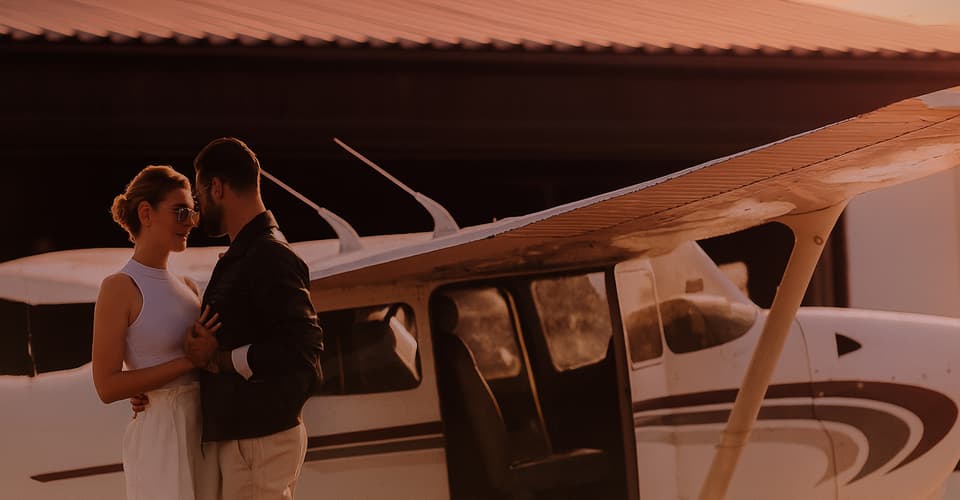
Ever looked up at a small airplane over the Valley and thought "I could do that"? You can. Becoming a private pilot in Los Angeles is a clear, step-by-step path, and most people who start it have never touched an airplane's controls before.
Here's the short version. Start with a discovery flight at Fly LA Experience to find out if flying is for you. If you're hooked, continue with full training at our sister company, The Flight Academy at Van Nuys (opens in a new tab), a Part 61 school. Most students earn their private pilot certificate in around 6 months, and some have finished in as little as 3 months.
Step 1: Take a discovery flight
A discovery flight is a real 1-hour lesson with an FAA-certificated flight instructor, in a Cessna 172 or Piper Archer from Van Nuys. Your instructor handles the first takeoff and landing, and in between you fly as much as you like. It's $230, no experience is needed, and the time can be logged as training toward your license. Book a discovery flight.
New to all this? Read what to expect on your first discovery flight.
Step 2: Choose your training path (Part 61 vs Part 141)
FAA flight training happens under one of two sets of rules:
- Part 61 is the flexible path. Your instructor builds training around you, and you schedule lessons when they fit your life.
- Part 141 is a structured program with an FAA-approved syllabus and set stages.
The Flight Academy at Van Nuys trains under Part 61. That flexibility matters if you have a job, classes, or a family: fly more in a slow season and less in a busy one, without falling behind a rigid program. Both paths lead to the same FAA private pilot certificate.
Students usually prefer the Piper Archers, and they're also welcome to fly the Cessna 172.
Step 3: Get your medical and student pilot certificate
You don't need either for lessons with an instructor. Before your first solo, you'll need:
- An FAA medical certificate, typically a third-class medical from an FAA-designated Aviation Medical Examiner.
- A student pilot certificate. Apply early so paperwork doesn't delay your first solo.
Step 4: Build your flight hours
Under 14 CFR 61.109(a), a private pilot applicant for a single-engine airplane rating must log at least 40 hours of flight time, including:
At least 20 hours with an instructor
- 3 hours of cross-country flight training
- 3 hours of night training, including one cross-country flight of over 100 nautical miles total and 10 takeoffs and landings to a full stop
- 3 hours of flying solely by reference to instruments
- 3 hours of checkride preparation within the 2 calendar months before the test
At least 10 hours solo
- 5 hours of solo cross-country time
- One solo cross-country of 150 nautical miles total, with full-stop landings at three points and one leg of more than 50 nautical miles in a straight line
- 3 solo takeoffs and landings to a full stop at an airport with an operating control tower
Forty hours is the legal floor. The FAA notes the national average is closer to around 75 hours, and that's normal: the checkride is about meeting a standard, not hitting a number. You must be at least 16 to fly solo.
Step 5: Pass the knowledge test and the checkride
Under 14 CFR 61.103, to earn a private pilot certificate (airplane) you must:
- Be at least 17 years old
- Read, speak, write and understand English
- Hold a student pilot certificate
- Get instructor logbook endorsements for the knowledge test and the practical test
- Meet the aeronautical experience requirements
- Pass the FAA knowledge test (a multiple-choice written exam) and the practical test, or checkride: an oral exam and a flight with an examiner
How long does it take?
At The Flight Academy, it's usually around 6 months, and some students have finished in as little as 3. It depends on how often you fly, how fast you meet the minimums, and how quickly you're comfortable and ready for the checkride. As general estimates:
| Schedule | Rough estimate |
|---|---|
| 3–4 lessons per week | About 3–4 months |
| 2 lessons per week | Around 6 months |
| 1–2 lessons per week | Often 8–12 months or more |
The biggest factor is consistency: frequent lessons mean less re-learning.
What makes learning to fly in LA different
Marine layer
Morning marine layer can delay early lessons, especially in late spring and early summer. Build in a little flexibility. The upside: you learn real go/no-go decision-making.
Busy airspace and a towered airport
Los Angeles has some of the busiest airspace in the country, including the Class B airspace around LAX. Van Nuys has an operating control tower, so you talk to ground and tower controllers on every flight. Radio work intimidates many new pilots, but here it becomes second nature, and it covers the FAA's solo towered-airport landings without a special trip.
Training pricing and financing
For training pricing and programs, visit The Flight Academy at Van Nuys (opens in a new tab) or call 818-516-8010. Training financing is available through Stratus Financial; The Flight Academy can share details.
FAQ
How do I become a pilot in Los Angeles?
Start with a discovery flight, get your medical and student pilot certificate, log at least 40 hours under Part 61, then pass the FAA knowledge test and checkride.
How long does it take?
Usually around 6 months at The Flight Academy, and some students finish in as little as 3.
How old do I have to be?
16 to solo and 17 for the certificate. Discovery flights at Fly LA start at age 12, with parent consent under 18.
Do I need a medical certificate to start?
No. You need one, plus a student pilot certificate, before your first solo.
Does my discovery flight count?
Yes. Time with an authorized instructor can be logged as training time.
Is financing available?
Yes, through Stratus Financial. See The Flight Academy for details.
Is LA airspace hard for beginners?
It's more demanding at first, but it makes you a confident radio communicator anywhere.
Start with a discovery flight. It's your first logged hour.
The best way to find out if you're meant to fly is to get in the airplane. One hour, $230, real time at the controls, departing from Van Nuys.
Confirmation comes by email, usually within 4 hours.